
News story

May 9, 2017

House sellers are facing testing questions

Springtime is traditionally the busiest time for the property market, but with a knotty problem affecting more homes than ever, whether you’re buying or selling, it’s worth doing some horticultural homework before you start.

Japanese knotweed is a highly invasive, aggressive and destructive plant, able to grow as high as four metres in just a few months and with roots that can spread seven metres. It’s non-native with no natural predators and can cause significant structural damage, growing through asphalt and other hard surfaces, often compromising building structures. Getting rid of it is a costly and time-consuming business involving specialist waste disposal because simply digging up the roots is not enough to kill it.
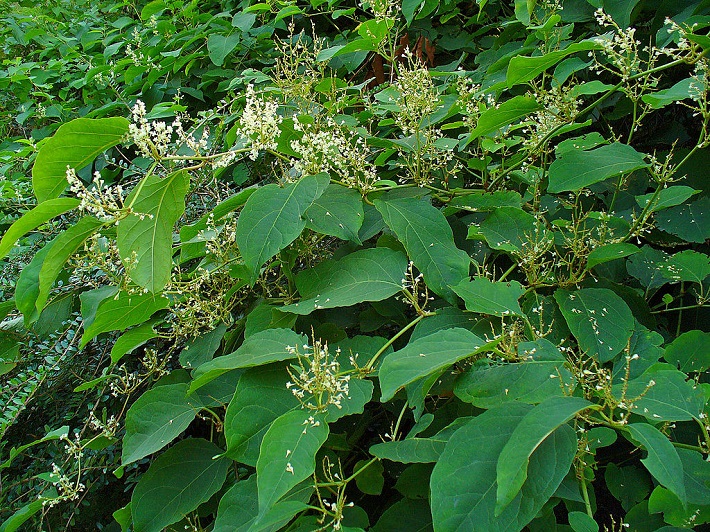
Image by H. Zell (Own work) [GFDL or CC BY-SA 3.0], via Wikimedia Commons

You can be fined up to £5,000 or sent to prison for two years if you allow contaminated soil or plant material from Japanese knotweed to spread into the wild, and now a landmark court ruling has found that a landowner is responsible if they do not prevent the plant from spreading from their land to adjoining properties.

The case involved a group of homeowners in South Wales who acted against Network Rail after Japanese knotweed grew into their garden from adjoining railway sidings. The knotweed had been there for at least 50 years and had been actively treated since 2008 to ensure visibility for trains on the line. In weighing up the claims of the homeowners, the judgement considered the extent of nuisance suffered and found in their favour, saying that the presence of Japanese knotweed was enough, without any physical damage, as it had the potential to affect the market value of a property seriously.

Many mortgage lenders restrict their lending on affected properties, and homeowners may have difficulty selling or find their property value reduced by as much as 50%.

There have been few previous rulings involving Japanese knotweed infestations, and the outcome is likely to put extra pressure on property owners to control the plant and significantly impact larger landowners and those responsible for tracts of public land.

“If you’re not a skilled gardener, it’s worth getting to grips with the Japanese knotweed identification. If you can see it growing on your property, then take steps to eradicate it. If it’s growing on neighbouring properties, speak with your neighbours, and if they don’t tackle the problem then it’s worth considering action.

If you are successful with a nuisance claim, you can push for neighbours to undertake a five-year eradication programme and ask for a guarantee from the specialist company involved, as well as seeking compensation, if there is evidence it has travelled through your boundaries.”

“Taking action to protect what is probably your biggest asset is a simple but sensible option, whether you’re buying, selling or staying put. These days, when you sell a property, you will be asked whether Japanese knotweed has been found on the property and the reply will be included in the comprehensive pack of buyer’s information that lawyers compile during the conveyancing process.”

Note: This is not legal advice; it provides information of general interest about current legal issues.

Stay in touch

Subscribe to our newsletter

Stay in touch

By completing your details and submitting this form you confirm you are happy for us to send you marketing communications and that you agree to our Website Privacy Policy and Legal Notice and to us using Mailchimp to process your data.


Sending

News/Insight

  • Pension and inheritance tax changes from April 2027: why now is the time to review your will and estate plan
    From 6 April 2027, most unused pension funds and pension death benefits are expected to be included in a person’s estate for inheritance tax purposes. This article explains what the changes could mean for families, pension nominations, wills, chari


    Read more
  • What happens when company owners disagree? The key to keeping private companies running smoothly
    Director and shareholder disagreements can quickly disrupt a business if they are not addressed early. This article explains what disputes can mean for a private company, how they can be avoided, and how legal advice can help protect stability and su


    Read more
  • SMEs urged to review risks as liability rules expand
    New criminal liability rules taking effect on 29 June 2026 will make it easier to prosecute businesses of any size where senior managers commit offences while acting on the organisation’s behalf.


    Read more
  • AI-written grievances add new pressure for employers
    AI is making it easier for employees to produce detailed, formal-looking grievances that refer to legal concepts and workplace rights. For employers, the key is to look beyond the language, identify the core concern and follow a fair, consistent grie


    Read more
  • What to check in a new build contract
    Buying a new build home can be exciting, but the legal process carries important risks. From long-stop dates and mortgage deadlines to specifications, deposits, service charges and warranties, early legal advice can help protect your position before


    Read more

What they say...

  • Client, July 2026
    Pragmatic, but commercially astute support “Genuinely, we valued your pragmatic, but commercially astute support. It has helped us get this tricky deal over the line in a manner that we both feel supports our needs in a balanced way and gives L

  • Chey, July 2026
    Professional and speedy “I’m extremely happy with the service provided by RIAA Barker Gillette. They were very professional, dealt with my matter at speed and were very accommodating with my disability. I wouldn’t hesitate to use th

  • Client, June 2026
    Thank you “I had a call with Pippa that was not only factual and to the point but also reassuring and very helpful. Would highly recommend.”

  • Client, June 2026
    Trusts services “Very helpful service which solved our problem.”

  • Client, June 2026
    Probate Services “We used Patrice Lawrence to deal with our parents’ probate, and she handled the case promptly, professionally and with the respect due for a matter of this nature.”

Read more
Send this to a friend