
The road ahead for Businesses

image of a stone cairn representing businesses balancing act

Photo by Jeremy Thomas on Unsplash

Whether you’re establishing, growing or selling a business or even forming a start-up, businesses must react and adapt to the challenges of an increasingly complex and changing economy.

It’s a balancing act. Businesses most likely to thrive will recognise the need to be proactive in reassessing their current needs, managing new and challenging risks, meeting their compliance obligations and forward-planning to reach the next stage of their evolutionary cycle.

Whether you need to review your corporate structure by putting a shareholders’ agreement in place or redraft your terms of supply in this new and constantly changing trade environment, our Corporate and Commercial team is ready to assist.

We have many years of experience working with businesses at all life cycle stages, in all shapes and sizes, and across various industries and sectors.

We support directors in their management roles and shareholders who may be looking for an exit or who are considering further potential equity investment.

We recognise that your business and individual needs are unique. So, we work closely with you to understand you and your business and consider your needs and objectives from your first point of contact.

We seek to establish long-standing professional relationships, become your trusted adviser, and support you proactively throughout your business lifecycle.

Our attention to detail and to your specific needs means that we can help you adapt to your industry standards, solve your legal and commercial problems, and provide you with realistic, pragmatic, and strategic advice that goes to the core of your interests.

Call Victoria Holland today to see if we can help you or your company.


Financial planning for cohabiting couples

picture of cohabiting couples

Photo by Khamkéo Vilaysing on Unsplash

This increasingly popular family type grants cohabiting couples limited legal protection. Unlike in a marriage or civil partnership, cohabiting couples have no recognised legal status in the UK. With England and Wales still having a considerable gender pay gap, amongst other gendered issues, the lack of legal rights disproportionately impacts women. As the Women and Equalities Committee report from August 2022 stated, “The lack of legal protection on family breakdown means that women, including women from an ethnic minority background and those who have had religious-only weddings, can suffer relationship-generated disadvantage.”

Contrary to popular belief, the UK does not recognise ‘common law’ marriages. As a result, cohabiting couples have limited options, and many need to be made aware of what could happen to their assets if they were to separate. Currently, the most effective means to protect an unmarried couple is to enter into a trust deed and/or a cohabitation agreement.

The family home

The family home is often the most valuable financial asset a couple owns during their relationship. However, making a financial claim against the family home depends entirely on ownership. In determining this, it is essential to consider whether the parties are joint owners, on what terms, and the amount contributed by each towards purchase, mortgage, and even significant repairs to the property.

Joint ownership gives both parties equal rights to stay in the property. If necessary, either joint owner can apply to the court for an order for sale. It is difficult, save in certain limited cases, to prevent the sale of a jointly owned property.

The position alters if there are any children under the age of 18. In those instances, one party may establish their need to remain in the property until the youngest child turns 18. In this scenario, the joint owners then divide the property’s equity at that later stage. Although this may deprive one party of their share in the capital, it resolves any housing problems for any children and the primary carer. The court will always consider the welfare of children as a priority.

If the family home is owned solely by one partner, the other may have little to no legal rights to remain in the house if their partner asks them to leave. They may, however, be able to claim a ‘beneficial interest’ in the property by getting the court to formally recognise the same, whether by reference to contributions or another legal principle.

Capital

The presumption regarding capital, including money in banks, expensive items, interest in insurance policies and other investments, are treated as belonging to the person whose name they are in at the time of separation. To establish otherwise, it may be arguable that capital was held in trust for the other.

Individual maintenance

Cohabiting couples are not entitled to claim financial maintenance from their partners in the same way that married couples can. However, the situation is different where dependent children are involved. For example, the parent who remains in the property or resides predominantly with the children (until the youngest child turns 18) may be able to claim child maintenance income.

Child maintenance

Parents have a legal duty to support their children financially. Hence, the parent living with the children after separation is entitled to child maintenance payments from the other parent. In most cases, this is not dealt with by the court. However, the parent with the day-to-day care of the children can apply to the Child Maintenance Service for child support unless a level of maintenance is agreed upon amicably. The parties may make other claims over children, but parties should seek expert legal advice before considering those options.

Pensions

These cannot be divided or shared between cohabiting couples who are separating.

Whilst together, or as part of estate planning, certain pension schemes make it easier to provide for your partner when you are unmarried and cohabiting, usually through the scheme member making an ‘expression of wishes’ declaration as to who benefits from their pension.

Cohabitation agreements

Unmarried couples living together can enter into a cohabitation agreement. It can establish the couple’s rights and responsibilities towards each other during their separation or death. It can seek to regulate interests in property and other finances and consider child arrangements and expenditures. It can potentially prevent the strength of future claims against property and finances upon either party’s death or a breakdown in their relationship.

Cohabitation agreements are becoming increasingly popular as they cover all aspects of joint life and prepare for the consequences of a potential split-up by offering reassurances for both parties and their assets. Well-drafted cohabitation agreements can provide certainty akin to if the couple were married. However, the law surrounding those agreements is less protective than those that assist married couples.

Cohabitation agreements are not automatically legally binding but provide clarity and show the parties’ intention.

The Women and Equalities Committee report made some excellent recommendations to improve the legal position for cohabiting couples and raise much-needed awareness of the issues. There have also been numerous bills put before Parliament for consideration.

Unfortunately, in November 2022, Parliament confirmed it would not consider further readings of the latest Cohabitation Rights Bill during the 2023/24 parliamentary session. The wait for real and much-needed reform continues.

Taking clear advice when purchasing a property or joint assets and entering into a cohabitation agreement and trust deed are the best routes for unmarried couples wishing to protect their interests.

Call family solicitor Pippa Marshall today to discuss your position and formalise your living arrangements.

Note: This article is not legal advice; it provides information of general interest about current legal issues.


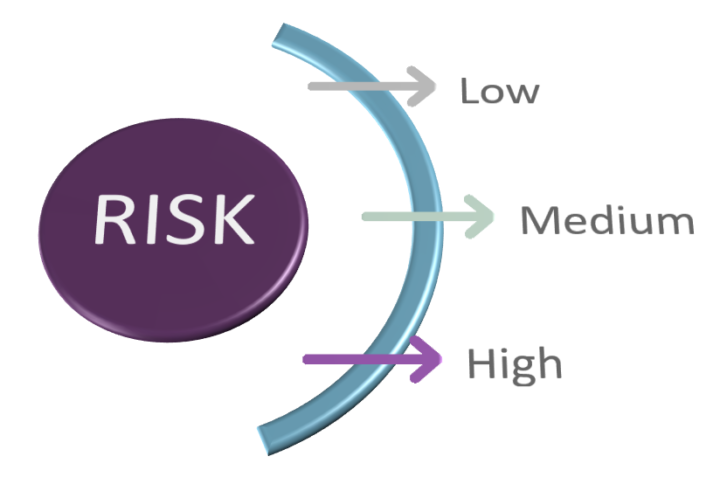
Risky business

regulatory investigations

Regulatory partner Susan Humble looks at the consequences of regulatory proceedings and how professionals can manage their regulatory obligations and lower their risk exposure.


Suppose you get it wrong? In the most serious of cases, you could face the possibility of criminal proceedings and separate proceedings brought against you by your regulator. Those regulatory proceedings can, at worst, lead to the loss of your means of making a living. And while proceedings are underway, both your and your family’s lives are put under extreme pressure, and relationships often flounder under such strain.

Moreover, the cost of defending proceedings without insurance can be unexpectedly high. The regulatory effort can often get in the way of your work, putting you and your business under more pressure. And, whatever the outcome, the reputational damage may be hard to get over, and your business may fail.

Our specialist regulatory team can provide you and your business with a regulatory health check. Our health check offers reassurance and ensures you are well-prepared to meet any regulatory challenge.

Our experts will review your policies, procedures, and controls to help you manage the burden of keeping your regulator happy and the risk of a minor issue escalating into something more serious. So let us take the strain while you concentrate on your core business.

Contact Susan Humble for further information on regulatory proceedings.

Note: This article is not legal advice; it provides information of general interest about current legal issues.


Marital agreements as a financial planning tool

Marital Agreements

Photo by Cytonn Photography on Unsplash

Research commissioned by The Marriage Foundation found that one in five UK marriages have utilised marital agreements. Marital agreements have recently become a focal point for couples who consider financial planning an essential marriage prerequisite. While many may think preparing for a marriage breakdown is unromantic, others view it as an essential part of financial planning and a vital security measure to safeguard their future. 

What are marital agreements?

A marital agreement is a written agreement entered into by a couple seeking to regulate their financial position should their marriage break down. A couple can enter into a marital agreement before marriage (known as a pre-nuptial agreement or prenup) or during a marriage (known as a post-nuptial agreement or postnup). 

Marital agreements set out the present ownership of assets and the intended future ownership of such assets in the event of a divorce. Such agreements define matrimonial, non-matrimonial, and joint and separate property. However, they can also deal with income, future earnings and interests under trusts and financial provisions for children.

Why enter into a marital agreement?

Couples enter into marital agreements to provide certainty, protect their assets, and clarify how they will conduct their financial affairs during and after a marriage. 

The law 

No specific law relating to marital agreements currently exists. Therefore, they do not override a court’s decision or automatically bind the courts upon divorce.

When considering the role of a marital agreement in divorce proceedings, the starting point is the Matrimonial Causes Act 1973. Section 25 of that Act obliges a judge to consider all the relevant circumstances of the case when deciding how to divide the parties’ finances on divorce. The courts will consider whether a marital agreement meets specific procedural and substantive safeguards when determining whether to uphold it.

The law relating to the fairness of marital agreements lies in the Supreme Court judgment in the case of Radmacher v Granatino. This decision provided the courts with guidance on the discretion to be applied when determining whether a marital agreement should be given ‘decisive weight’. The courts will assess fairness by considering the following criteria:

  1. The agreement must be freely entered into, which means that both parties must enter into the agreement of their own free will, without any pressure from each other or anyone else.
  2. The parties must have a full appreciation of the implications of the agreement. 
  3. Holding the parties to their agreement, in the prevailing circumstances, must be fair. 

Legislative reform

In 2014, the Law Commission published its Matrimonial Property, Needs and Agreements report. The report recommended legislative reform to make marital agreements that are in a prescribed form and adhere to certain safeguards to be legally binding. If an agreement met the Commission’s criteria, the courts would class it as a “qualifying nuptial agreement”. A qualifying nuptial agreement would prevent the courts from making financial orders on divorce inconsistent with the terms set out in any marital agreement unless an order is needed from the court to meet one of the parties’ financial needs or to benefit a child of the family.

Nuptial agreements that do not adhere to the criteria would continue to be treated as a ‘relevant factor’ by a judge deciding what financial orders to make on divorce.

A qualifying nuptial agreement must meet the following criteria:

  1. The agreement must be contractually valid. 
  2. The agreement must be validly executed as a deed and contain a “relevant statement” signed by both parties confirming that they understand the agreement is a qualifying nuptial agreement that will remove the court’s discretion to make financial orders on divorce except to meet financial needs.
  3. The parties cannot enter into an agreement within the 28 days preceding the wedding.
  4. Both parties to the agreement must have received disclosure of material information about the other party’s financial situation when entering into the agreement.
  5. Both parties must have received legal advice when they entered into the agreement.
  6. The agreement must not prejudice any children. For example, if the agreement makes insufficient financial provisions for children, it will be set aside by the court.
  7. The agreement must meet both parties’ needs regarding the standard of living during the marriage. Provision for needs is not limited to an income stream; it includes capital provision and the long-term provision of a home. The possibility of ongoing financial provision for a party caring for children is essential. The court would not uphold an agreement that results in a party receiving very little or nothing.

While the government has not yet issued its final response to the Law Commission’s proposals, some of the proposed reforms may become law in due course. Accordingly, it is vital to remember the Commission’s recommendations to ensure a marital agreement complies with the suggested requirements for a qualifying nuptial agreement. Complying with these requirements will mean that the marital agreement has the best chance of being legally binding in the future and will provide parties with as much clarity and certainty as possible regarding the division of assets in the event of a marriage breakdown. In addition, thinking ahead will save parties the stress, time and legal costs of contested financial proceedings.

Financial planning

No set criteria make some couples more eligible to enter into marital agreements. Certain factors may motivate some couples more than others to protect their wealth before they tie the knot.

Couples have often used marital agreements to ring-fence inheritance, family businesses and valuable family assets such as heirlooms from the ‘matrimonial pot’. Recently, more and more couples have opted for marital agreements to protect and preserve assets for the benefit of their children from a previous marriage.

Often, the only purpose of having a marital agreement is simply because one party had acquired significantly more wealth than the other before the relationship began. Therefore, the wealthier party wishes to protect their wealth in case of a marital breakdown.

Protecting family assets and inheritance

In the event of a divorce, marital agreements can play a significant role in allowing a spouse to retain their shareholding in a generational family business established before the marriage.

It is common for owners of family assets to ensure that gifted and inherited assets do not become the property of the non-blood-related spouse in the event of a divorce. Therefore, that spouse cannot claim from the asset. In this scenario, couples often use a marital agreement to outline alternative housing provisions and identify other assets and resources to meet income needs. 

Conclusion

With divorce rates significantly increasing year after year, it is wise for couples to consider discussing marital agreements, either before or during their marriage, as a financial planning tool and to seek independent legal advice to ensure its validity and fairness so that the court can give weight to it in any future divorce proceedings.

Call family solicitor Pippa Marshall today to find out how she can help you plan for your future.

Note: This article is not legal advice; it provides information of general interest about current legal issues.


Artificial intelligence will be challenged

artificial intelligence

Photo by Amanda Dalbjörn on Unsplash

Artificial intelligence, or AI, has been hogging the headlines recently. Students pass exams using ChatGPT; a photographer won an international competition with an AI-generated image.[1] And with the coming of age of generative artificial intelligence, 75% of companies say they will be adopting some form of it, according to the latest research from the World Economic Forum.

But as sure as night follows day, claimants will challenge the march of the bots in the courts.

Streaming platforms last month removed a song that used AI interpretation of real-life performers Drake and The Weeknd. The song went viral, but shortly afterwards, the creator, known as @ghostwriter, said that AI trained on the artists’ voices made the song Heart On My Sleeve. As a result, streaming platforms, including Spotify and Apple Music, swiftly removed the song on copyright grounds.

Over recent months, global music publisher Universal Music Group has demanded that platforms take down any AI-generated songs. They have requested platforms to cut off access to their music catalogue to stop developers from using Universal’s songs to train AI technology.

Getty Images has taken legal action against one of the emerging text-to-image AI software companies. Users enter instructions for an image to be created by the software, and Getty is arguing that millions of its images have been used to train the AI, so infringing Getty’s copyright.

Unlike Getty, the image library Shutterstock is actively embracing AI. It has chosen to partner with developers for AI learning. In addition, it offers customers access to AI-generated images on its platform, saying this offers greater confidence as it provides a user licence for such images.

Victoria Holland, head of corporate and commercial at RIAA Barker Gillette, said:

“Whether the Getty case or the @ghostwriter AI-created song prove to be a breach of copyright is yet to be decided, but for now the law is racing to catch up with technology,

One of the promises of generative artificial intelligence is to provide creative output for even the most un-creative, but for now, it may equally be a doorway into a quagmire of legal complication. It’s not just the copyright issue that users must consider; they must also recognise that the output from generative AI can be factually incorrect or fabricated.

The quality of the training data and how a user frames a request can create very different results.

In one instance, a regional mayor in Australia was said by ChatGPT to have been involved in fraudulent activity, when he had actually been the whistleblower in the case and it was reported that he was considering a defamation claim against developer OpenAI.

Victoria added:

“The jury is out on the bigger picture of whether AI is a glorious opportunity or an existential threat to society. We’ve seen Elon Musk speak out against its wholesale adoption. Geoffrey Hinton, the so-called godfather of AI, resigned from Google, saying he now regretted his work.

For now, companies and individuals may be well advised to keep a tight rein on their creative use of artificial intelligence.”

Call Victoria Holland today if you have any queries regarding artificial intelligence.

Note: This article is not legal advice; it provides information of general interest about current legal issues.


[1] Boris Eldagsen submitted an AI-generated image titled ‘Pseudomnesia: The Electrician’ to the Sony World Photography Awards 2023. As a result, he won first prize in the creative, open category, later declaring his action and refusing the award.


Articles of association and shareholders’ agreements explained

A company’s articles of association (otherwise known as ‘Articles’) set the governance rules and procedures the company, its directors and shareholders must follow. Articles are mandatory under the Companies Act 2006 – all companies incorporated in England and Wales must have them.

Companies with more than one shareholder often enter into a shareholders’ agreement to establish further constitutional rules. This article examines the roles of Articles and shareholders’ agreements, their differences, and the reasons each business might consider having both in place.

What are Articles?

Articles are constitutional documents of a company which need to be filed and are open to inspection at Companies House. Company law prescribes certain forms for Articles, called “model articles”. A company can amend the model articles to suit its needs.

Articles set out the company’s essential management and administrative structure. They prescribe the rights attaching to its shares (including voting, dividend and capital distribution rights). And they regulate the company’s internal affairs, such as how shares can be issued, transferred or bought back; procedures for board and shareholder meetings; and the powers and duties of directors and how they may be appointed and terminated.

What is a shareholders’ agreement?

A shareholders’ agreement is a contract between a company’s shareholders and, often, the company. Like the Articles, this agreement seeks to regulate the company’s and its shareholders’ conduct by setting out their respective rights and responsibilities, but usually within the broader context of establishing a fair relationship between them and preventing potential shareholder disputes. However, unlike Articles, shareholders’ agreements are not mandatory. Importantly, they are private between their parties and not filed at Companies House.

Typical shareholders’ agreement provisions include:

  • the protection of minority and majority shareholders;
  • dispute resolution mechanisms;
  • the extent to which shareholders may have other business interests besides the company;
  • the decision-making power of shareholders and directors;
  • when it may be compulsory for shareholders to transfer shares; and
  • post-shareholding restrictions for shareholders.

What are the differences between Articles and shareholders’ agreements?

The main difference between shareholders’ agreements and Articles is that while Articles are publicly available at Companies House, shareholders’ agreements are private between the parties, and so their provisions remain confidential.

Shareholders’ agreements apply only to those shareholders who are party to it (original parties or by entering into a deed of adherence). In contrast, the Articles apply to the company and all its shareholders and directors.

Why might a business consider having both Articles and a shareholders’ agreement?

The decision as to whether a company needs a shareholders’ agreement in addition to Articles often hinges on the confidential nature of the rules it wishes to implement and whether any information likely to be included is commercially sensitive.

What if there’s a breach?

A shareholders’ agreement is a contract between shareholders. One party’s breach of its terms enables the other parties to sue the defaulting party for damages. They can also apply to the court for an injunction to prevent or limit a breach.

On the other hand, a breach of the Articles may result in the action or decision made in breach of the Articles being void or invalid.

Shareholders deciding whether to include provisions in Articles or a shareholders’ agreement should therefore consider whether and in what circumstances a claim in damages, or an injunctive relief, is as valuable as the potential remedy of having the breaching action declared void or invalid.

How can we help?

It can be challenging to navigate the requirements of company law and to determine whether it might be appropriate to put more complex governance provisions in place and when.

RIAA Barker Gillette’s experienced corporate and commercial team can help you tackle these issues and advise how best to reflect your goals and intentions in your company’s constitutional documents.

Speak to corporate solicitor Evangelos Kyveris today.

Note: This article is not legal advice; it provides information of general interest about current legal issues.


When is a gift of the family home, not a gift?

gift of the family home

Photo by Tierra Mallorca on Unsplash

The family home is often one of the most valuable assets in an estate. For a parent, gifting the family home to their child during their life seems like an easy decision: “if I do not own my home at death, I will not be taxed on it.” Unfortunately, HMRC knows the family home is often one of the most valuable assets, and it follows that the rules for gifting the home are complex.

This article explores some Inheritance Tax consequences of gifting the family home. However, it does not cover all of the potential tax consequences which can arise, so it’s worth checking your unique position with a qualified solicitor.

What is Inheritance Tax?

Inheritance Tax (IHT) is a tax payable on the value of your estate. Everything you own makes up your estate – money in bank accounts, investments, personal possessions, and, of course, the family home. It also includes the value of any gifts made within the last seven years.

If the value of your estate is above the current IHT threshold of £325,000 (the Nil Rate Band), then your estate may be subject to IHT. The current rate of IHT is 40% on any amount above the Nil Rate Band. While this tax is usually due at death, there are some circumstances when HMRC can charge IHT during your life.

Gifts subject to tax

When a parent gifts their child all or part of their home, the gift is considered a “potentially exempt transfer” (PET). It is only potentially exempt because if the parent dies within seven years of making the gift, the value of the gift is added back into the estate for IHT purposes. The amount of tax that is due on the gift depends on two things:

  1. the value of the gift; and
  2. how soon after making the gift did the parent die (Taper Relief)?

This ‘seven-year rule’ is the rule that most people rely upon when making a gift.

When a gift of the family home is not a gift

Suppose a mother gifts her property to her daughter but continues to live in the property; the mother has reserved the benefit of living in the property rent-free. In that case, the gift is called a ‘gift with reservation of benefit’ (GROB). If a gift is a GROB, it is not a PET. Therefore, the property’s value remains in the mother’s estate for IHT purposes – even if she dies seven years or more after making the gift.

Because the mother retains a benefit from the property, HMRC does not consider it a genuine gift. So, while the daughter owns the property on paper, HMRC believes it belongs to the mother for IHT purposes. However, there is one exemption from the GROB rule, where the child resides in the property with the parent as their principal residence.

Benefit from Residence Nil Rate Band

It’s always worth considering whether you need to make a gift of the family home. The family home is linked to a valuable IHT relief – the Residence Nil Rate Band (RNRB).

Currently, RNRB relief stands at £175,000. The relief is only available in some estates. For an estate to be eligible, the estate must:

  1. have a property that the deceased has lived in during their lifetime;
  2. which passed to a lineal descendant (child or grandchild);
  3. the estate’s total value is less than £2,000,000. The relief is tapered if the estate exceeds £2,000,000.

You can only take advantage of this relief if you have a property in your estate.

How to make a GROB a PET

The rules around GROBs are complex. Many factors can affect whether a gift is considered a GROB.

As you can appreciate, it isn’t straightforward. If you are considering making a gift of the family home and want to avoid the risk of it being considered a GROB, contact us today for some estate planning advice.
Similarly, suppose you’ve already made a gift of the family home and are concerned that it may be a GROB. In that case, we can help you to understand the IHT implications and your options moving forward.

Contact private client solicitor James McMullan today.

Note: This article is not legal advice; it provides information of general interest about current legal issues.


Get your skates on to get moving

Property transaction delays. Picture of a couple finally moving house.

Photo by HiveBoxx on Unsplash

Following the dramatic 30% fall in sales agreed in the aftermath of last year’s mini-budget (when mortgage rates soared), there were concerns that double-figure inflation and the cost-of-living crisis would put a permanent dampener on the property market. Whilst mortgage interest rates remain higher than in recent years, the fears of an overall slowdown look mistaken. The latest figures from Rightmove show that the number of sales agreed is up and just 11% down from 2019.

While markets may be calmer, the time between putting a property on the market and moving home has been vastly extended. Both buyers and sellers are experiencing significant property transaction delays. The time taken to achieve a sale rose by 50% to 65 days compared to a year ago. The time to exchange is up 5% to 139 days, according to property data specialists TwentyEA.

Why the delays?

Backlogs

The slowdown is due to several factors. From 2020 to 2022, the market has had to contend with a massive backlog arising from the pandemic while also experiencing a considerable surge due to the stamp duty holiday that reduced moving costs.

According to Rightmove, 44% more homes were sold subject to contract in June 2022 than in 2019.

Increased numbers

An increase in property transactions strains conveyancing departments. This strain is compounded by the fact that many different law firms are often involved in a single property chain. A chain can only move as fast as the slowest party. Instructing an experienced, knowledgeable, and efficient conveyancer can reduce property transaction delays by days, if not weeks.

At RIAA Barker Gillette, we can often effect a successful exchange of both a sale and purchase within 90 days of receiving instructions. This timescale is far below the national average, as referenced above.

Compliance

Even before commencing substantive conveyancing work, there is an ever-increasing amount of Client Due Diligence (“CDD”) to contend with. Compliance with current Anti Money Laundering regulations (“AML”) involves conveyancers spending a significant amount of time checking clients’ sources of wealth and funds and verifying at least two forms of ID (often with the assistance of electronic verification software). Therefore, clients must prepare their documentation in advance so that there are few, if any, queries a conveyancer would need to raise before concluding compliance obligations with a risk assessment so that they can begin substantive work on a transaction.

Local searches

Whenever a property is for sale, the buyer will have a ‘local search’ carried out to check there are no planning restrictions that could impact the property’s value. However, record numbers of search requests have put extra demands on the process. Many local authorities can take up to a month to handle search requests. 

Mortgages

Similarly, mortgage lenders are under pressure. The time taken to secure a formal offer can now typically take up to six weeks. 

For sellers, preparation includes checking the location of any relevant deeds and conveyancing documents from
the original purchase. While the Land Registry holds most properties as an electronic entry, old deeds may contain detailed information outside the Land Registry records. Any property that has stayed in the same hands for many years may need digital registration, which requires the original deeds. 

Other paperwork

Other critical paperwork covers property modifications requiring planning permission or building regulations consent. Here, certificates will be required to show these aspects have been followed and satisfied.

For leasehold properties, leaseholders must supply documentation for any works requiring approval by the freeholder.

And any electrical or gas work will need a certificate to show that the work has been carried out following applicable regulations by a suitably qualified technician.

Similarly, new oil boilers or oil tank installations should have an OFTEC certificate, and new windows should have a FENSA certificate.

Tenure

The nature of the property for sale may also impact the duration of the transaction. Many leasehold properties are now subject to the provisions of the new Building Safety Act 2022. The Act requires additional documentation from both the current leaseholder and the freeholder in addition to the ‘standard’ block management package, which a seller must supply to the buyer. Getting in touch with the relevant parties at the outset can avoid a leasehold sale becoming unnecessarily protracted.

How to avoid property transaction delays

Crucially, you should instruct a conveyancer as early as possible. Under the Law Society’s Conveyancing Quality Scheme Protocol, sellers must supply buyers with completed protocol forms, more commonly the:

  • TA6 – Property Information Form
  • TA7 – Leasehold Information Form
  • TA10 Fittings and Contents Form

Completing these forms and locating any ancillary documents can be time-consuming and “front-loaded”. A head start on this process, facilitated by a fully qualified conveyancer, can reduce the transaction time and allow all parties to progress the transaction quickly and smoothly.

Sellers wishing to be race-ready before putting their property on the market will ensure their solicitor has examined the title, lined up the paperwork, and anticipated and dealt with any problems in advance. It’s a tactic that avoids property transaction delays later and means sellers are ready to act when the right buyer comes along.

Note: This article is not legal advice; it provides information of general interest about current legal issues.


Can a lease extension remove burdensome ground rent charges?

Photo by Cytonn Photography on Unsplash

Photo by Cytonn Photography on Unsplash

With a few exceptions, landlords who grant new residential long leases for a premium after the enforcement of this Act may now only charge the leaseholder a peppercorn rent. A peppercorn rent is effectively a nil-rated annual rental payment.

However, while the 2022 Act went some way to abolish annual ground rents going forwards, it is not retrospective. As such, ground rent payments charged under long leases granted before 30 June 2022 do not benefit from this effect and remain in place. Many may be significant, rising at regular intervals throughout their lease term.

A possible solution

While the Levelling Up, Housing and Communities Secretary, Michael Gove MP, recently declared a desire to further reform the UK leasehold system in an attempt to ensure that “if you buy a flat, it should be yours“, many leasehold owners continue to be affected by potentially escalating ground rents, in addition to increasing service charges.

In a time of economic pressure, those still paying ground rent may be considering their options to avoid this financial burden. Of course, you could go “cap in hand” to your landlord to negotiate away any ground rent payments. However, a landlord does not have to negotiate with you.

Until the government introduces further changes, lease extensions offer existing leaseholders the only real opportunity to compel a landlord to give up their ground rents. But how?

How a lease extension can remove ground rent charges

Under section 56 of the Leasehold Reform, Housing and Urban Development Act 1993, all qualifying tenants of a leasehold property have the right to claim a new lease “at a peppercorn rent for a term expiring 90 years after the term date of the existing lease,” often described as a lease extension.

To qualify (subject to a few exceptions), you must have owned your lease for at least two years. In addition, the lease must have originally been granted for more than 21 years at a low ground rent.

Accordingly, provided an existing long lease owner qualifies under the 1993 Act, the landlord must grant a new lease for a peppercorn rent, removing any ground rent payment charge, whether minimal or increasingly onerous, albeit at a premium. 

The 2022 Act also applies to non-statutory, “voluntary” lease extensions of existing long residential leases. In most cases, where existing leaseholders elect to extend their lease voluntarily through negotiations, the new term of the lease may now only be subject to a charge of a peppercorn ground rent. However, this only applies to the period extended beyond the date the original term was due to expire. As a result, you must continue paying ground rent until your current lease term expires.

As explained above, all leaseholders may seek a voluntary lease extension from their landlord. However, if you follow this route, there is no guarantee the landlord will agree to it, as they are not obligated to do so.

Why you may still be paying ground rent

Lease extensions will invariably increase the value of the lease and the marketability of the property. Most lenders have specific requirements for the minimum length of years they are prepared to accept. Historically, lessees primarily sought lease extensions to increase the length of the existing term of their lease. However, removing ground rent charges is fuelling leaseholders to apply for a lease extension. 

Many leaseholders are seeking lease extensions sooner rather than later to avoid paying years of ground rent and a higher premium, despite having many years left on their lease. 

Contact Stuart Jacobs from our leasehold enfranchisement team today to see if you qualify for a lease extension. Stuart can assess the pros and cons of the statutory route versus the voluntary lease extension option. 

Note: This article is not legal advice; it provides information of general interest about current legal issues.


Prenuptial agreements; have you got yours?

While a prenuptial agreement can be difficult to discuss with your partner, and one may seem unromantic to factor into your wedding plans, it’s essential to understand their benefits and to discuss them openly and honestly with your partner.

This article will explore the advantages of having a prenuptial agreement, who should consider one, and how to get one.

What is a prenuptial agreement?

A prenuptial agreement, or ‘prenup’ for short, is an essential legal document that couples should consider when getting married. A prenup is an agreement between a couple that details how their assets and liabilities will be divided if they divorce. It can also outline the rights and responsibilities of each party during the marriage if they wish.

The advantages of having a prenuptial agreement

A prenup does several things for a couple considering marriage. First, it helps protect both parties’ assets in case of a divorce. The prenup helps to ensure that the couple’s assets are divided fairly.

Another benefit of having a prenuptial agreement is that it can help reduce the stress and conflict that can arise during a divorce. Having a prenup in place lets both parties know exactly what to expect if their marriage does not work out. This can reduce the time and money the couple would spend in court and make a divorce smoother for all involved.

A prenup can help to protect a partner’s assets, such as business interests, inheritances, and investments. This can be particularly beneficial if one partner has accumulated significant wealth before the marriage.

How to get a prenuptial agreement

In the UK, no procedures make a prenuptial agreement automatically legally binding. However, they are still relied on in court. They can be upheld in divorce proceedings if the below criteria are met:

  • Both parties have received legal advice, and the agreement meets their needs.
  • The prenuptial agreement must be fair, contractually valid, understood by both parties and made at least 28 days before the wedding.
  • Children should not be prejudiced.

How to discuss a prenup with your partner

Discussing a prenup with your partner can be a complex and sensitive subject. It’s essential to approach the subject openly and respect each other’s opinions. Be honest with your partner about why you think a prenup is necessary. Explain that both parties have certain rights and responsibilities and that a prenuptial agreement can help protect those in the event of a divorce.

Finally, it’s important to be open to negotiation. Both parties should be willing to compromise to come to an agreement that is fair for both parties. The agreement being fair is a condition for it to become legally binding.

Contact family solicitor Pippa Marshall today to find out more.

Note: This article is not legal advice; it provides information of general interest about current legal issues.


Stay in touch

Subscribe to our newsletter

Stay in touch

By completing your details and submitting this form you confirm you are happy for us to send you marketing communications and that you agree to our Website Privacy Policy and Legal Notice and to us using Mailchimp to process your data.


Sending

News/Insight

  • Renters’ Rights Act: why process and paperwork matter more than ever for landlords
    The Renters’ Rights Act has now passed into law, marking one of the most significant shifts in the private rented sector in a generation. Most of the new measures will take effect in May 2026, with a national landlord database to follow later in th


    Read more
  • Understanding the Roles of Executors and Trustees
    When making a will, you place significant trust in those appointed to carry out your wishes. Executors and trustees are key roles, often held by the same people, but their responsibilities differ. Understanding these roles and their obligations helps


    Read more
  • Assigning or Subletting a Commercial Lease: What Tenants Need to Know
    This article explains the key differences between assignment and subletting, outlines the legal framework in England and Wales, and highlights the practical issues tenants should consider before taking action.


    Read more
  • Completion and post-completion steps in a sale: Final steps for sellers
    A guide to completion and post completion steps in a corporate sale including exchange, stamp duty, Companies House filings and key administrative requirements.


    Read more
  • How to protect your brand: A beginner’s guide
    Trademark protection for businesses explained, including how to register a trademark in England and Wales and the key steps to protect your brand.


    Read more

What they say...

  • Paul Woodman, March 2026
    Will writing “Excellent service from start to finish. Efficient and good value. Charlotte was very professional, knowledgeable and understanding.”

  • Client, March 2026
    Great Service “Contacted RIAA to update my will and other things. Charlotte and James provided an efficient, friendly service, and the process was dealt with quickly. Much appreciated.”

  • Client, March 2026
    Expert knowledge and support “Pippa was invaluable in her insight, knowledge, and support. Through what is a very difficult time, she gave me hope that there is something to be done. Very solutions-oriented!”

  • Eve, March 2026
    Professional, compassionate and seamless legal support “I would like to express my sincere gratitude to Charlotte, Solicitor at RIAA Barker Gillette (UK) LLP, for the outstanding support she provided to my father during the creation of his will

  • Laura Kelly, February 2026
    Review of legal guidance received “I recently worked with Patrick Simpson on my settlement agreement. Patrick guided me through every stage with exceptional care and diligence. He kept the process moving efficiently, always updating me promptly

Read more