
News story

June 9, 2021

No-fault divorce: An end to the blame game

Ministers announced on Monday that the Divorce, Dissolution and Separation Act 2020 will come into force on 6 April 2022, allowing married couples to divorce without assigning any kind of blame.

Couples and lawyers alike have been eagerly awaiting confirmation as to when the no-fault divorce legislation would come into force. Previously, it had been indicated that the legislation would come into force in Autumn 2021, but following Monday’s announcement, it has been pushed back to Spring 2022.

Although a setback in terms of timing, the announcement finally gives couples who have been waiting to get divorced, without playing the ‘blame game’, a degree of certainty as to when they can start proceedings and, therefore, start planning their future.
So, what does this new legislation mean for divorcing couples?

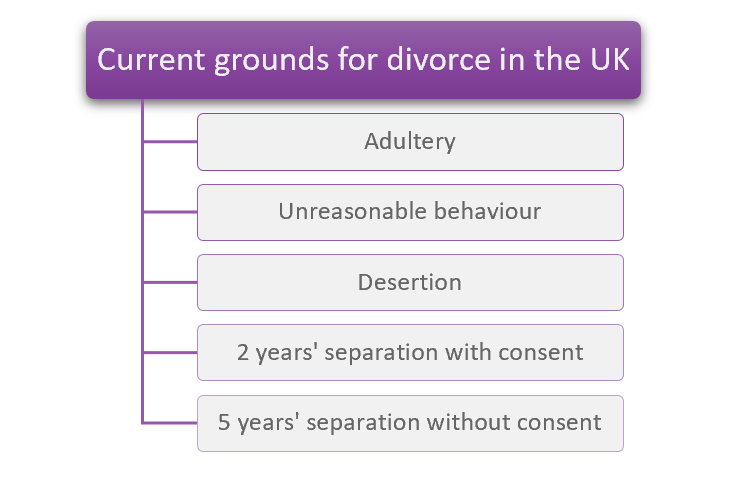
Many couples wish to get divorced quickly and without having to cite any form of bad conduct in their divorce petition. No bad conduct has occurred in some cases, and the couples have drifted apart or fallen out of love. Therefore, no blame is to be applied. However, no fast solution has been available to date, and couples have had to either wait for two years and divorce on the grounds of two years’ separation with consent or cite grounds such as unreasonable behaviour on their divorce petition.

Lawyers have recognised for many years that citing a party’s bad behaviour in a divorce can cause unnecessary emotional damage to couples and their children, particularly where they hope to co-parent together. In addition, where the parties must agree on a financial settlement and child arrangements, starting the divorce on a negative footing can hamper progress in resolving these matters amicably.

“THE COURTS DO NOT TAKE BAD CONDUCT INTO ACCOUNT WHEN DECIDING ON HOW THE ASSETS SHOULD BE DIVIDED UNLESS THE MISCONDUCT IS FINANCIAL AND IT WOULD BE INEQUITABLE TO DISREGARD TO IT.”

Pippa Marshall, Family Lawyer at RIAA Barker Gillette (UK) LLP

No-fault divorce is not expected to lead to an increase in divorces. It may, however, mean that there will be an influx of cases when the legislation comes in in April 2022, as couples may wait until then to start their divorce.

The divorce process will not be any quicker than it currently is. There will be a six-month period before the parties can apply for the final divorce certificate (decree absolute).

If you are considering getting divorced, we would be happy to advise whether it is worth waiting until April 2022. Each family situation is different and has its own challenges, and it may or may not be appropriate to wait, depending on your circumstances.

Contact family solicitor Pippa Marshall today for advice and information on no-fault divorce or any other family matter.

Note: This is not legal advice; it provides information of general interest about current legal issues.

Stay in touch

Subscribe to our newsletter

Stay in touch

By completing your details and submitting this form you confirm you are happy for us to send you marketing communications and that you agree to our Website Privacy Policy and Legal Notice and to us using Mailchimp to process your data.


Sending

News/Insight

  • The Employment Rights Act is a call to action for employers 
    A new year, a new employment framework: what employers need to know about the Employment Rights Act passed by parliament in December 2025.


    Read more
  • Dilapidations explained: What commercial tenants and landlords need to know
    Dilapidations are a common source of dispute at the end of a commercial lease. They can involve significant sums of money and often come as an unwelcome surprise to tenants who believed they had left a property in reasonable condition. Understanding


    Read more
  • The role of due diligence in corporate transactions
    In corporate transactions, due diligence is a key stage that usually follows agreement of Heads of Terms, allowing the Buyer to investigate the target company or its assets before committing to the deal.


    Read more
  • Love in later life and the inheritance tax trap
    Increasingly, lawyers are seeing couples who have chosen to live together rather than marry, sometimes for many years, without fully appreciating how differently the law treats them, particularly when it comes to inheritance tax and financial protect


    Read more
  • Understanding Heads of Terms in corporate transactions
    Heads of terms are a crucial first step in corporate transactions. Learn what they include, why they matter, and how they shape successful deals.


    Read more

What they say...

  • Amish Bristol, January 2026
    Absolutely brilliant, fast, professional, clear and delivered a robust service “Recent mortgage oversight from Ben Marks and Anne was superbly dealt with, and I intend on moving all my business to them. For a big firm, they really do pay attent

  • Client, January 2026
    Excellent experience “The process of my work was quick and effective.”

  • Vicky, January 2026
    Clear, friendly, helpful “Very efficient and helpful with arrangements for my will.”

  • R Cook, December 2025
    Settlement Sorted “Grayson Stuckey was great. Efficient and friendly with all aspects of the support provided. We worked well together and achieved a positive outcome. Recommended.”

  • Ivan Naisbitt, December 2025
    More than just a service “Michael Davies has been representing me for about 35 years, and I cannot recommend him or RIAA Barker Gillette (UK) highly enough. Aside from the normal conveyancing, he is always on hand to advise and guide you throug

Read more
Send this to a friend