
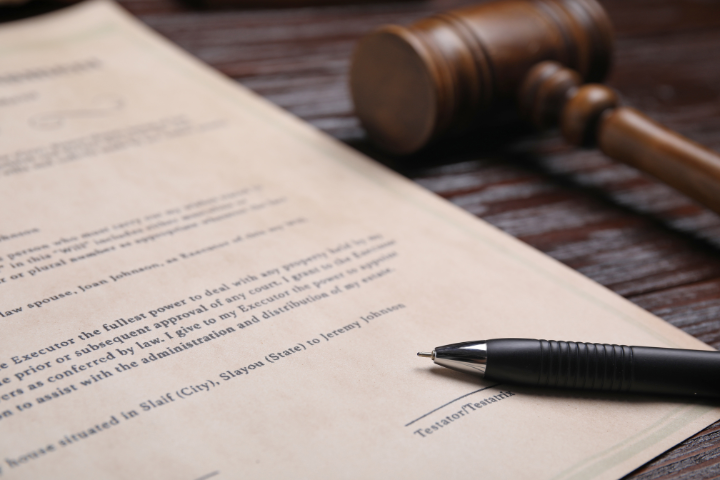
When someone makes a will, they place a great deal of trust in the people they appoint to carry out their wishes. Two of the most important roles in this process are those of executor and trustee. While they are often discussed together and frequently carried out by the same individuals, the responsibilities involved are quite different. Understanding what each role entails and the obligations that come with it can help you make informed decisions when planning your own estate or when you find yourself asked to take on either role.
What is an Executor?
An executor is the person (or persons) named in a will to administer the deceased’s estate. Their job is, in essence, to gather in the assets, settle any debts and liabilities, and distribute what remains to the beneficiaries. It is a role with a clear beginning and end. Once the estate has been fully wound up and all assets distributed, the executor’s duties come to a close.
The practical tasks involved can be wide-ranging. An executor will typically need to register the death, secure the deceased’s property, notify banks and other institutions, and arrange valuations of assets. They are responsible for calculating and paying any Income Tax and Inheritance Tax that may be due, and for applying to the Probate Registry for a Grant of Probate, which is the legal authority to deal with the estate. Throughout the process, the executor is accountable to all of the estate’s beneficiaries and creditors.
What is a Trustee?
A trustee, by contrast, takes on a longer-term responsibility. Where a will creates a trust, perhaps to look after assets for children until they reach a specified age, or to provide for a vulnerable family member, the trustee is the person charged with managing those assets on behalf of the beneficiaries. This can involve making investment decisions, protecting trust property, and distributing income or capital in accordance with the terms set out in the will.
Unlike the executor’s role, which is temporary, a trusteeship can last for years or even decades. The trustee is accountable to the specific beneficiaries of the trust and must always act in their best interests. Trusts also bring their own tax obligations. A trustee may need to register the trust with HMRC, complete annual self-assessment tax returns, and ensure the correct tax is paid on any income or gains the trust generates.
The Overlap: When Executors Become Trustees
It is very common for the same people to be appointed as both executors and trustees under the same Will. In practice, this means that once the main administration of the estate is complete, they shift from winding things up to managing assets for the longer term. The formal dividing line is the point at which the executor assents (or formally transfers) assets into the trust. From that moment, their legal duties change, even though the individuals remain the same.
This transition is not always straightforward. The skills and temperament needed to administer an estate efficiently are not necessarily the same as those required to manage investments and make distributions over many years. It is something worth thinking carefully about when choosing whom to appoint.
Who Can Be Appointed?
Anyone aged 18 or over can be appointed as an executor or trustee, and it is also possible to appoint a trust corporation. There is no strict upper limit on numbers, though for practical purposes most Wills appoint between two and four executors. For trusts, there is an important legal requirement to bear in mind: a minimum of two trustees (or a trust corporation) is needed to give a valid receipt for the proceeds of sale of land. This means that if a trust holds property, having a sole trustee can create real difficulties.
When deciding whom to appoint, it is worth considering whether the person is willing and able to take on the role, whether they are likely to be available when the time comes, and whether they have the skills or experience to manage what may be a complex set of responsibilities. Choosing someone younger than the person making the Will is a sensible precaution, as is having a frank conversation with the proposed appointee before finalising your Will.
Legal Duties and Personal Liability
Both executors and trustees are subject to legal duties that carry real weight. They must act with reasonable care and skill, avoid conflicts of interest, keep proper records, and act impartially between beneficiaries. The principal legislation governing these roles includes the Administration of Estates Act 1925 and the Trustee Act 2000, which sets out the standard of care expected and provides certain default powers of investment.
Crucially, both executors and trustees can be held personally liable if they fail to carry out their duties properly. If an executor distributes assets without first settling debts, or a trustee makes a poor investment decision without taking proper advice, they could find themselves personally responsible for any resulting loss. This is not a theoretical risk. Beneficiaries have the right to challenge the actions of executors and trustees, and in serious cases the court can remove them from their role.
Conflicts of Interest
It is not unusual for an executor or trustee also to be a beneficiary of the estate or trust. While this is perfectly lawful, it does create the potential for conflicts of interest. A trustee who is also a beneficiary must be especially careful to act in the interests of all beneficiaries, not just themselves. Where significant conflicts arise, it may be prudent to seek independent legal advice or to consider appointing an independent trustee alongside family members.
Payment and Expenses
Lay executors and trustees, meaning those who are not professionals, are generally not entitled to payment for their time. They can, however, reclaim reasonable expenses incurred in carrying out their duties, such as travel costs and postage. Professional executors and trustees, including solicitors and trust companies, are entitled to charge for their services, and any such charging provision is usually set out in the Will itself. If it is not, the Trustee Act 2000 provides a statutory basis for professional charging in certain circumstances.
What if an Executor or Trustee Cannot or Will Not Act?
Life does not always go to plan, and there are times when a named executor may not wish to take on the role. Provided they have not already started to deal with the estate (known as “intermeddling”), an executor can formally renounce their appointment. Once they have begun to act, however, renouncing becomes more difficult and may require a court order.
For trustees, the position is slightly different. A trustee can retire from their role under the provisions of the Trustee Act 1925, provided that after their retirement there will still be at least two trustees or a trust corporation in place. Where there is a dispute or concern about the conduct of an executor or trustee, beneficiaries can apply to the court for their removal and replacement.
What Happens if No Executor is Named?
If a will does not name an executor, or the named executor is unable or unwilling to act, the court can appoint an administrator to deal with the estate. Similarly, where someone dies without leaving a will at all (known as dying intestate), the rules of intestacy determine both who inherits and who has the right to apply for a Grant of Letters of Administration. The duties of an administrator are broadly similar to those of an executor, though the process of appointment is different. Citizens Advice provides a helpful overview of how intestacy works in practice.
Getting It Right
The roles of executor and trustee carry significant responsibility, and the choices you make in your will can have lasting consequences for your family. Taking the time to think carefully about whom you appoint, and discussing your plans with them in advance, can save a great deal of difficulty later on.If your estate involves significant assets, property, trusts for children or vulnerable family members, or any degree of complexity, it is well worth getting in touch with your solicitor to talk things through. A solicitor experienced in wills and estate planning can help you to structure your will so that the right people are in place, with the right powers, to carry out your wishes effectively.
About the Author
James McMullan is a Partner and also heads up our Private Client team. James started his career as a family lawyer, but over the years, his practice has grown to encompass all aspects of private client law, including estate planning, Inheritance Tax, lasting powers of attorney, lifetime gifts, living wills, mental capacity issues, probate and contentious probate, trusts and, of course, wills.
James prides himself on spending sufficient time with clients at the outset of a matter to fully understand their position, needs, and objectives. He is committed to resolving disputes effectively, frequently using alternative dispute resolution (ADR). Given its costs and uncertainty, court litigation is a last resort.