
News story

June 9, 2021

No-fault divorce: An end to the blame game

Ministers announced on Monday that the Divorce, Dissolution and Separation Act 2020 will come into force on 6 April 2022, allowing married couples to divorce without assigning any kind of blame.

Couples and lawyers alike have been eagerly awaiting confirmation as to when the no-fault divorce legislation would come into force. Previously, it had been indicated that the legislation would come into force in Autumn 2021, but following Monday’s announcement, it has been pushed back to Spring 2022.

Although a setback in terms of timing, the announcement finally gives couples who have been waiting to get divorced, without playing the ‘blame game’, a degree of certainty as to when they can start proceedings and, therefore, start planning their future.
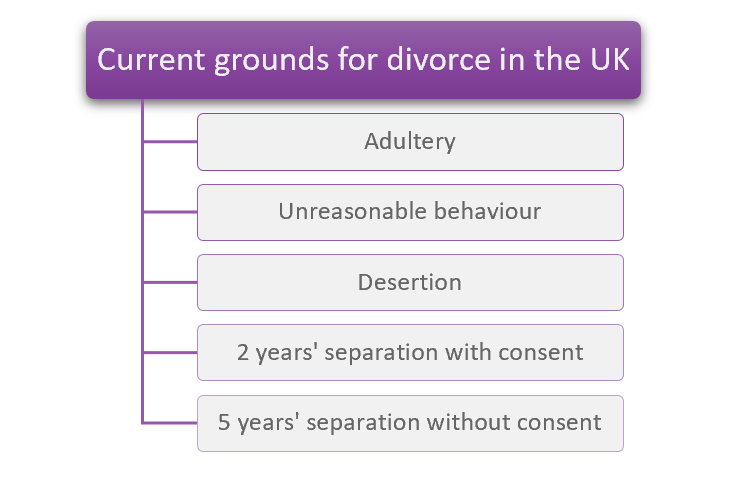
So, what does this new legislation mean for divorcing couples?

Many couples wish to get divorced quickly and without having to cite any form of bad conduct in their divorce petition. No bad conduct has occurred in some cases, and the couples have drifted apart or fallen out of love. Therefore, no blame is to be applied. However, no fast solution has been available to date, and couples have had to either wait for two years and divorce on the grounds of two years’ separation with consent or cite grounds such as unreasonable behaviour on their divorce petition.

Lawyers have recognised for many years that citing a party’s bad behaviour in a divorce can cause unnecessary emotional damage to couples and their children, particularly where they hope to co-parent together. In addition, where the parties must agree on a financial settlement and child arrangements, starting the divorce on a negative footing can hamper progress in resolving these matters amicably.

“THE COURTS DO NOT TAKE BAD CONDUCT INTO ACCOUNT WHEN DECIDING ON HOW THE ASSETS SHOULD BE DIVIDED UNLESS THE MISCONDUCT IS FINANCIAL AND IT WOULD BE INEQUITABLE TO DISREGARD TO IT.”

Pippa Marshall, Family Lawyer at RIAA Barker Gillette (UK) LLP

No-fault divorce is not expected to lead to an increase in divorces. It may, however, mean that there will be an influx of cases when the legislation comes in in April 2022, as couples may wait until then to start their divorce.

The divorce process will not be any quicker than it currently is. There will be a six-month period before the parties can apply for the final divorce certificate (decree absolute).

If you are considering getting divorced, we would be happy to advise whether it is worth waiting until April 2022. Each family situation is different and has its own challenges, and it may or may not be appropriate to wait, depending on your circumstances.

Contact family solicitor Pippa Marshall today for advice and information on no-fault divorce or any other family matter.

Note: This is not legal advice; it provides information of general interest about current legal issues.

Stay in touch

Subscribe to our newsletter

Stay in touch

By completing your details and submitting this form you confirm you are happy for us to send you marketing communications and that you agree to our Website Privacy Policy and Legal Notice and to us using Mailchimp to process your data.


Sending

News/Insight

  • Pension and inheritance tax changes from April 2027: why now is the time to review your will and estate plan
    From 6 April 2027, most unused pension funds and pension death benefits are expected to be included in a person’s estate for inheritance tax purposes. This article explains what the changes could mean for families, pension nominations, wills, chari


    Read more
  • What happens when company owners disagree? The key to keeping private companies running smoothly
    Director and shareholder disagreements can quickly disrupt a business if they are not addressed early. This article explains what disputes can mean for a private company, how they can be avoided, and how legal advice can help protect stability and su


    Read more
  • SMEs urged to review risks as liability rules expand
    New criminal liability rules taking effect on 29 June 2026 will make it easier to prosecute businesses of any size where senior managers commit offences while acting on the organisation’s behalf.


    Read more
  • AI-written grievances add new pressure for employers
    AI is making it easier for employees to produce detailed, formal-looking grievances that refer to legal concepts and workplace rights. For employers, the key is to look beyond the language, identify the core concern and follow a fair, consistent grie


    Read more
  • What to check in a new build contract
    Buying a new build home can be exciting, but the legal process carries important risks. From long-stop dates and mortgage deadlines to specifications, deposits, service charges and warranties, early legal advice can help protect your position before


    Read more

What they say...

  • Client, July 2026
    Pragmatic, but commercially astute support “Genuinely, we valued your pragmatic, but commercially astute support. It has helped us get this tricky deal over the line in a manner that we both feel supports our needs in a balanced way and gives L

  • Chey, July 2026
    Professional and speedy “I’m extremely happy with the service provided by RIAA Barker Gillette. They were very professional, dealt with my matter at speed and were very accommodating with my disability. I wouldn’t hesitate to use th

  • Client, June 2026
    Thank you “I had a call with Pippa that was not only factual and to the point but also reassuring and very helpful. Would highly recommend.”

  • Client, June 2026
    Trusts services “Very helpful service which solved our problem.”

  • Client, June 2026
    Probate Services “We used Patrice Lawrence to deal with our parents’ probate, and she handled the case promptly, professionally and with the respect due for a matter of this nature.”

Read more
Send this to a friend